
Gamification – the critical driver for next-gen players
12 November, 2025
Add Your Heading Text Here
Winna Media Insights
18 December, 2025
Deglobalisation and the Gaming Sector:
Navigating Risk in a Fragmenting World
Original Report by Richard Dailly, Founder, Leighton Road Consulting

Why Deglobalisation Matters Now
For decades, the global gaming industry has thrived in an environment shaped by liberal democracy, open markets and shared international standards. That environment is changing rapidly. Political populism, geopolitical conflict, weakening multilateral institutions and the reassertion of national sovereignty are accelerating a shift towards deglobalisation.
For gaming operators, suppliers and investors, this is not an abstract geopolitical debate. Deglobalisation introduces tangible risks across regulation, compliance, technology, reputation and capital deployment. Understanding these forces — and how they intersect with gaming — is now a strategic necessity.
From Rules-Based Order to Power-Based Politics
The post-1945 international system relied on broadly accepted rules governing trade, finance, corruption, intellectual property and enforcement. Institutions such as the United Nations, FATF and multilateral development banks provided consistency and accountability, even where enforcement was imperfect.
That system is eroding. Major powers are increasingly bypassing international frameworks in favour of unilateral action and regional “spheres of influence”. Global standards are losing authority, replaced by local interpretations shaped by politics rather than principle.
For the gaming sector — highly regulated, capital-intensive and internationally mobile — the loss of predictable global benchmarks creates uncertainty around licensing, compliance and dispute resolution.
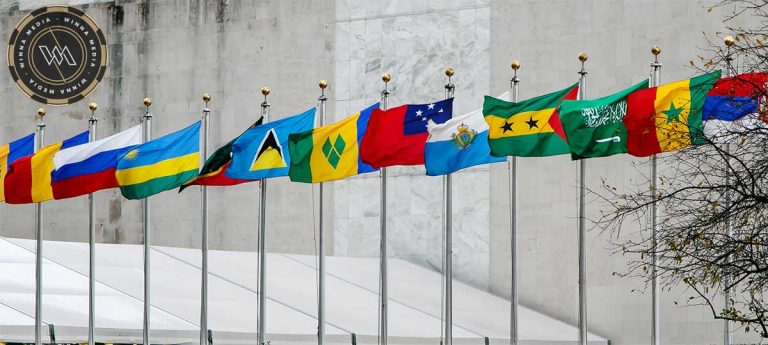
The Return of Sovereignty and Regulatory Risk
Sovereignty has become a powerful political rallying cry. Governments are asserting greater control over domestic markets, often driven by nationalist sentiment, moral agendas or security concerns. While this may resonate with voters, it introduces heightened risk for foreign companies.
Gaming is especially exposed. The sector often operates in offshore jurisdictions, border regions or legal grey areas, and carries a historical reputation — fair or not — for links to organised crime and money laundering. In a deglobalised environment, this makes gaming operators easier political targets.
Foreign companies may face regulatory pressure through tax investigations, licence challenges or allegations of misconduct, with limited transparency and few avenues for appeal.
Rising Threats of Extortion and State Pressure
One of the most serious risks is the increased potential for extortion. As international oversight weakens, local authorities and politically connected actors may exploit their power to extract payments or concessions from foreign businesses.
In some jurisdictions, organised crime operates with tacit state protection. For gaming operators, this creates a dangerous overlap between criminal activity and official enforcement. Extortion may take the form of regulatory harassment, sudden compliance demands or threats to operational continuity.
Public perception compounds the problem. Given the gaming sector’s legacy reputation, allegations may not trigger strong public or governmental defence, leaving companies isolated.
Governments as Active Adversaries
Beyond criminal threats, gaming companies increasingly face state-led risk. Governments may target foreign operators under the banner of anti-corruption, tax enforcement, monopoly control or public morality. In a fragmented regulatory environment, these actions may be selective, politically motivated or inconsistent.
Agenda-driven political leaders pose an additional challenge. Gambling restrictions, advertising bans or punitive taxation can be introduced quickly, reflecting personal moral views rather than evidence-based policy. With reduced accountability and weaker international pressure, reversals are unlikely.
Technology, Cybersecurity and Intellectual Property
Technology underpins the modern gaming industry — from platform security and fraud prevention to player protection and customer experience. In a deglobalised world, technological advantage also becomes a vulnerability.
State-backed cyber espionage, intellectual property appropriation and data access demands are increasing. Some governments openly reject Western concepts of IP protection, while others deploy sophisticated cyber capabilities to extract proprietary systems and insights.
This trend threatens globally integrated technology platforms and may force gaming groups to fragment systems, localise data and rethink cross-border technology strategies.
The Breakdown of Global Standards
For gaming operators, inconsistent standards increase operational complexity and legal exposure. More critically, they undermine enforcement and litigation. When parties no longer share agreed benchmarks, resolving disputes becomes slow, costly and unpredictable.
In extreme cases, enforcement may depend less on compliance and more on political alignment
Spheres of Influence and Market Alignment
The global landscape is increasingly shaped by competing power blocs, led by the United States, China and Russia. Smaller nations may choose to align closely with a dominant power, effectively ceding aspects of sovereignty in exchange for investment, protection or political backing.
For gaming companies operating in Asia, Africa, Eastern Europe and parts of Latin America, this means market access and regulatory treatment may hinge on geopolitical alignment rather than commercial merit. Neutrality becomes harder to sustain.
Climate Change, Crisis and Compounding Volatility
Deglobalisation is unfolding alongside climate change, migration pressures and rapid technological disruption. These forces strain public finances, fuel social unrest and reinforce nationalist politics.
Governments facing fiscal pressure may prioritise defence, energy security and AI investment over regulatory stability or economic openness. For gaming operators, this heightens volatility around consumer demand, workforce mobility and political risk.
Strategic Communications as a Defensive Tool
In this environment, strategic and crisis communications become critical risk-management tools. Companies that understand their reputation, monitor online narratives, and proactively manage stakeholder relationships are better positioned to withstand attacks.
Building credibility with regulators, media, law enforcement and influential local stakeholders before a crisis occurs can significantly reduce damage when pressure emerges. Pre-positioning is no longer optional.
Preparing for a Harder World
Deglobalisation does not end international gaming, but it fundamentally changes the risk profile. Fragmented regulation, politicised enforcement, cyber threats and reputational vulnerability are becoming structural realities.
Operators and investors who recognise this shift — and adapt governance, communications and strategy accordingly — will be better placed to protect value in an increasingly hostile operating environment.

What This Means for Operators and Investors
Key implications to consider now:
- Reassess jurisdictional risk beyond regulatory compliance, factoring in political alignment and state behaviour
- Strengthen governance and transparency to withstand scrutiny in weaker rule-of-law environments
- Invest in strategic and crisis communications as a core risk-mitigation function
- Review technology and IP exposure, particularly in high-risk jurisdictions
- Expect greater volatility in licensing, taxation and enforcement — and price that into investment decisions
Deglobalisation is not a future risk. It is already reshaping the global gaming landscape.